

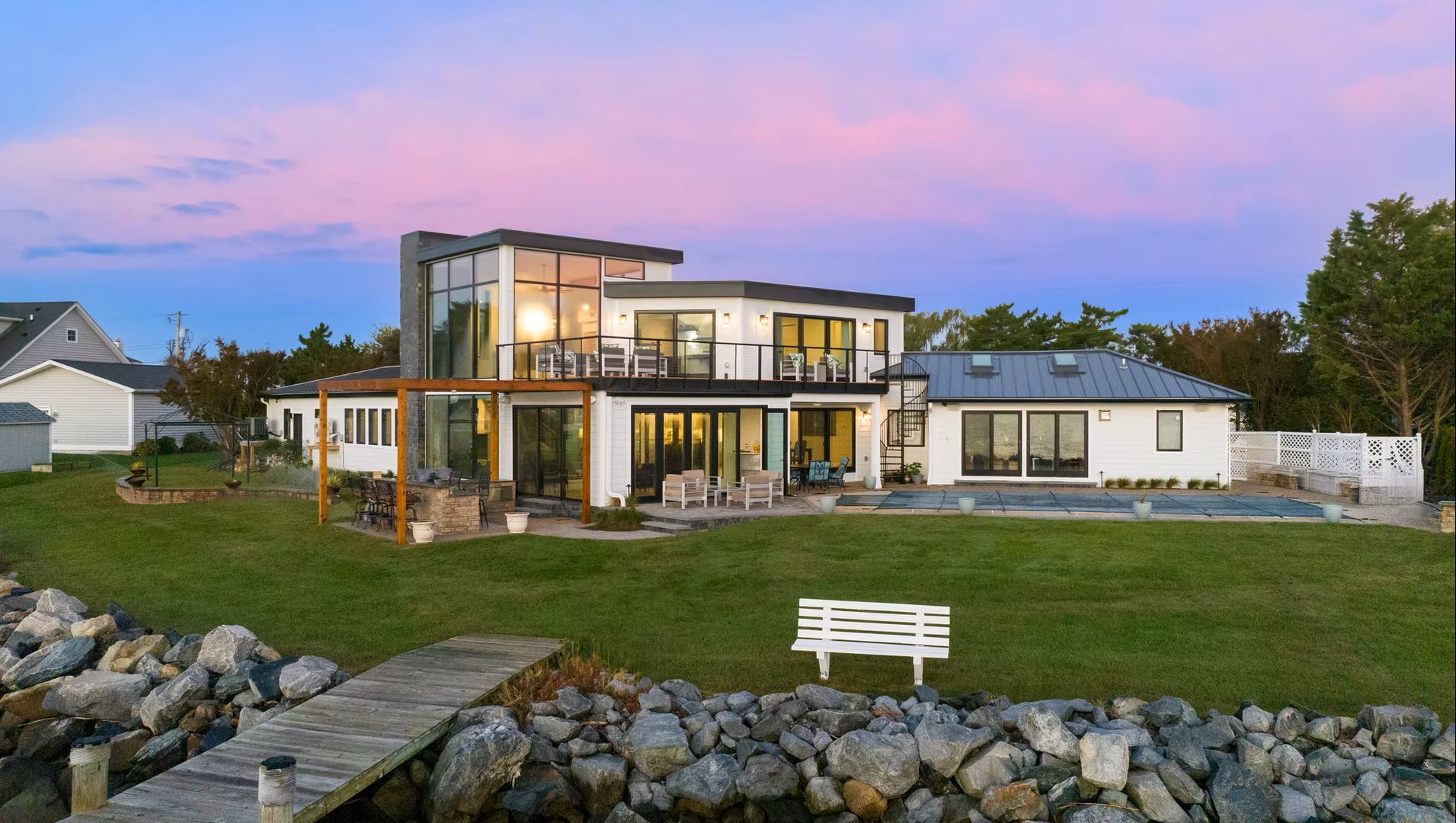

When you set out to build or remodel a waterfront home in the Annapolis area, the permitting process can feel like navigating a maze. City rules, county regulations, shoreline protections, flood zones, and zoning nuances all add to the complexity of renovating a waterfront home. We believe that choosing the right architecture and construction partner can make all the difference. Below, we share our insights to help you understand what’s really involved with the permitting process for a waterfront home in Annapolis, how it differs from typical building permitting, and what to look for when selecting a design-build team.
Understanding the Permitting Landscape in Annapolis
City vs. County Jurisdictions — Know Where You Are
If your property lies within the city limits of Annapolis, MD, your starting point is the city’s Annapolis Department of Planning and Zoning. They manage building permits for construction, additions, repairs, plumbing/mechanical work, and more.
Yet, waterfront properties often raise extra considerations. For example, if your project involves piers, docks, pilings, boat lifts, or any work below the mean high tide line, you’ll need additional approvals, including one from the Army Corps of Engineers.
In many cases, larger site changes (eg. new construction, expansions, or substantial alterations) may also require review by the county or other agencies, especially when shorelines, erosion, or critical-area buffers come into play.
Many waterfront homeowners must consider their “impervious and pervious surfaces” as a factor. There are several calculations and multiple regulations that must be considered before creating your design and home footprint.
What Types of Permits Might Be Required
- Building permits — for construction, structural changes, additions, mechanical/plumbing/electrical work
- Grading permits — especially when there is ground disturbance, excavation, or regrading of a lot
- Stormwater management & sediment/erosion control plans
- Health Department Permit — this can be one of the more difficult permits to get approval for, especially when your property does not have public sewer access and a septic tank/field is needed
- Marine/Coastal permits — for docks, piers, pilings, boat lifts, dredging, seawalls, or any work below mean high tide
- Historic district or environmental-zone permits — if the property lies within a protected zone
Timing & Process Complexity — Be Prepared
The process for waterfront permits can take many months, especially when marine construction or dredging is involved. Any dock or piling project below means high tide needs a building permit, and if dredging or filling is involved, a grading permit is required as well. Many marine proposals must be submitted well in advance for public hearings.
Plan-review timelines can vary: basic interior-only building permits may be processed in a few weeks, but grading, stormwater, and coastal-zone reviews often require more engineering detail and environmental analysis. Even small changes — like replacing a driveway or adding an accessory structure — can trigger stormwater review when located near the shoreline.
What Waterfront Permitting Means for Homeowners
Protecting Shorelines & Protecting the Bay
Living on the water is a privilege; one that comes with responsibility. The shoreline regulations exist to preserve water quality, minimize erosion, protect habitats, and ensure sustainable shoreline management. Many waterfront projects require sediment-control and stormwater plans to ensure construction does not negatively impact the Chesapeake Bay.
Safety, Flood Risk & Structural Considerations
Waterfront properties face tidal fluctuations, flood-zone requirements, erosion, and coastal storm exposure. Permitting ensures structures are built to withstand these conditions and that drainage systems do not cause runoff pollution. Even interior renovations may require approvals if they alter the structure or utilities in a way that affects site conditions.
Avoiding Pitfalls — What Homeowners Often Miss
- Underestimating the time required for marine and coastal permits
- Forgetting that cumulative project impact may trigger grading or stormwater permits
- Overlooking shoreline buffer or critical-area restrictions
- Designing the project before understanding permitting constraints, leading to redesigns or delays
- Proper financial planning must be a priority from the start of the project. In addition to construction costs, it's important to consider the time required to develop an effective design, balance the project’s scope of work, and navigate the permitting process. A comprehensive understanding of these factors will help align the overall time and investment needed for a successful outcome.
How to Choose the Right Architecture & Builder Partner
Look for a True Design-Build Firm
A design-build team keeps architecture, engineering, permitting, and construction together under one coordinated process. This continuity helps avoid miscommunication and ensures that permit requirements are built into the design from day one.
Demand Waterfront Know-How
Waterfront permitting differs significantly from standard residential permitting. It is essential that your architectural and construction partners understand key factors such as flood zones, coastal setbacks, shoreline buffers, stormwater obligations, and the regulatory landscape.
When building on the Chesapeake Bay and its tributaries, several critical considerations must be addressed. High winds during storms necessitate careful planning to mitigate structural impacts, which may include the use of storm-rated windows, reinforced entry doors, and durable roofing and siding. Additionally, stainless steel fasteners are required for certain applications, and insulation upgrades are vital for the waterside of the home.
Transparency, Communication & Collaboration
Your partner should guide you through constraints and opportunities from the first consultation. We begin with conversation and assessment, then translate your goals into feasible, code-compliant solutions that reflect waterfront realities. Our proven step by step process will guide you through the complex world of permitting, building & remodeling while providing an incredible client experience for you to enjoy and celebrate.
A Proven Track Record — Real Waterfront Projects
Experience matters. A partner who has completed Annapolis-area waterfront homes understands both the beauty and the complexity of designing near the water — from resilience planning to coastal-materials selections to historic or environmental approvals.
Why Landis Is Uniquely Positioned to Help
For more than 35 years, we’ve honed a design-build process rooted in clarity, creativity, technical strength, and respect for community and environment. When we expanded into Annapolis under the leadership of John Johnson, we brought not only our architectural and construction expertise, but also a dedicated local team deeply familiar with the region’s regulations, culture, and shoreline sensibilities.
We understand that waterfront permitting is more than a checklist — it’s a framework for responsible, resilient design. Our approach integrates feasibility studies, zoning evaluation, architectural design, engineering, and permitting strategy into a seamless workflow. That means fewer surprises, more thoughtful solutions, and a smoother path from vision to reality.
If you’re considering a new waterfront home or a remodeling project along the Chesapeake Bay, we’d be honored to talk through your goals, help you understand permitting requirements, financial investment, and explore what’s possible on your site. Let’s build something beautiful, lasting, and perfect for the Annapolis shoreline.