


If you're planning on starting a remodeling project in the greater Washington, DC area, one of the first questions on your mind is probably: how long is this actually going to take? It's a fair question, and the answer depends on a handful of factors that are worth understanding before you commit to a project or firm.
Whether you're updating a bathroom in Arlington, opening up a kitchen in Bethesda, or undertaking a whole-home renovation in Capitol Hill, having realistic expectations about timing leads to a smoother, more predictable experience. Here's what you should know heading into a remodel in 2026.
The Short Answer: It Depends on the Scope
There’s no single number that applies to every remodeling project, but most projects follow a consistent sequence: design, permitting, and construction. While construction is often the most visible phase, the work that happens beforehand is what allows a project to move efficiently once it begins.
Design (typically 3–6+ months total)
Most projects begin with a structured design process:
- Schematic Design / Feasibility (6–10 weeks): Existing conditions are documented, zoning and code are reviewed, and initial design options are developed with preliminary budget ranges.
- Design Development (5–10 weeks): The design is refined, engineering and trade coordination occurs, and detailed drawings and selections begin to take shape.
- Construction Documents & Permitting (2–16+ weeks depending on jurisdiction): Drawings are finalized and submitted for permit review, with timelines varying significantly across DC, Maryland, and Virginia.
Construction (ranges vary by project type)
Once permits are approved and materials are procured, construction timelines generally fall within the following ranges:
- Bathroom Remodel: ~6 to 12 weeks depending on scope and level of reconfiguration
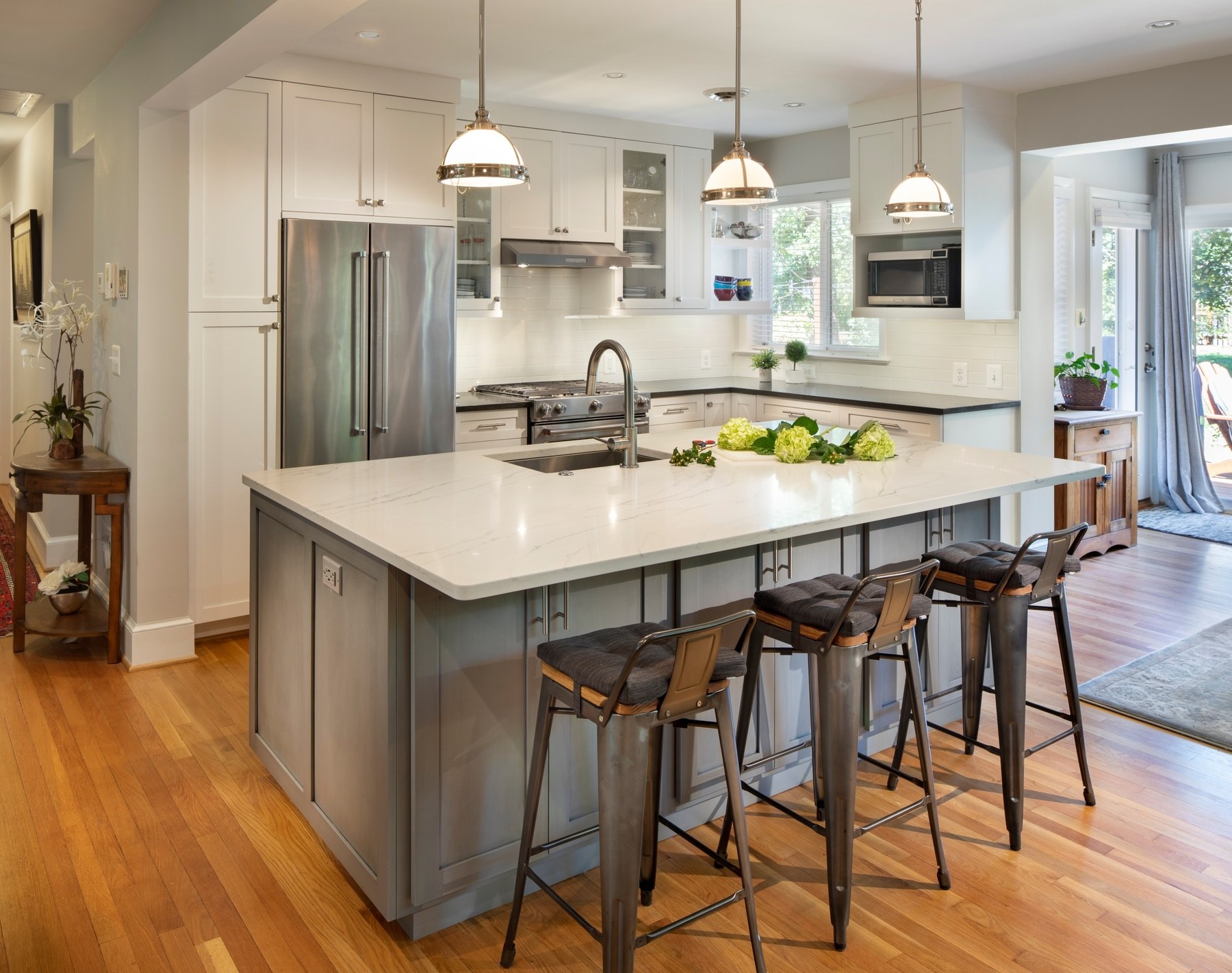
- Kitchen Remodel: ~6 to 20 weeks depending on complexity, layout changes, and cabinetry lead times
- Whole-Home Renovation: ~16 to 20+ weeks, often extending further for larger or more complex projects
- Additions / Expansions: ~20 to 24+ weeks depending on structural scope and site conditions
Taken together, a typical remodeling project - from initial design through construction completion - often spans several months to over a year, depending on scope, complexity, and permitting requirements.
What Affects Your Remodeling Timeline?
Permitting and Approvals
Permitting timelines vary significantly by jurisdiction. Fairfax County, Arlington, Montgomery County, Washington, DC, and the City of Alexandria and Anne Arundel County all have different review processes, staffing levels, and turnaround times.
A straightforward permit for interior work might take 2 to 4 weeks. Projects that trigger historic review, zoning variances, or HOA approvals can add months before construction even begins. If you're in a historic district, such as parts of Old Town Alexandria or certain neighborhoods in DC, expect additional layers of review.
Your Architect and contractor should be able to give you a realistic read on the permitting timeline for your specific location and scope of work based on past permitting applications.
Design and Material Selections
A significant portion of timeline risk occurs before construction begins. Projects that enter construction with incomplete selections often experience avoidable delays.
Cabinetry, tile, plumbing fixtures, appliances, and specialty materials all carry lead times, often
6 to 12+ weeks for custom or imported items. While supply chains have stabilized compared to prior years, high-end and custom materials still require advanced planning. Finalizing your selections early is one of the best things you can do to keep your project on schedule.
A well-managed project aligns design decisions, procurement, and construction sequencing before work begins on site.
The Age and Condition of Your Home
The DC metro area has a wide range of housing stock, from century-old rowhouses in the District to mid-century ramblers in the suburbs to newer construction in rapidly developing corridors. Older homes are more likely to present surprises once walls are opened up: outdated wiring, galvanized plumbing, insufficient structural support, or asbestos-containing materials that require abatement.
These discoveries aren't unusual, and a good contractor plans for them with reasonable contingencies in both the budget and the timeline. But they can add days or weeks depending on what's found. If you're remodeling a rowhouse or older home, it's wise to build extra flexibility into your schedule.
Contractor Scheduling and Trade Coordination
A remodeling project involves a sequence of specialized trades: demolition, framing, plumbing, electrical, HVAC, drywall, painting, tile, cabinetry, flooring, and more. Each trade needs to complete its phase before the next can begin, and inspections often need to happen in between.
In an active market, trade availability can influence your timeline. The region's construction market has stayed busy through 2025 and into 2026, driven by continued demand for home renovations and a steady flow of residential projects. Contractors who maintain strong relationships with their subcontractors and plan schedules well in advance tend to keep projects moving more efficiently.
Season and Weather
For projects that involve exterior work, additions, or new foundations, the time of year matters. Winter weather can slow excavation, concrete pours, and exterior framing. Summer heat can affect productivity too, though it's generally less disruptive. Interior-only remodels are mostly insulated from weather impacts, though deliveries and trade schedules can still be affected during extreme weather events.
How to Set Yourself Up for a Smooth Timeline
A few things you can do as a homeowner to help your remodeling project stay on track:
Start the design and selection process early. The more decisions you can finalize before construction begins, the fewer delays you'll encounter. Work with your contractor or designer to establish a material selection schedule with clear deadlines.
Be realistic about your move-out or live-in plan. Living in a home during a major renovation is doable for some projects but impractical for others. Discuss this with your contractor so the schedule accounts for your living situation.
Communicate regularly with your project team. Weekly check-ins or progress updates help you stay informed and give you the chance to address questions before they become bottlenecks.
Build in a buffer. Even well-managed projects encounter the occasional hiccup. Adding a 10 to 15 percent time cushion to your expected timeline is a reasonable way to manage expectations without creating unnecessary stress.
Why Work with Landis
At Landis Architects | Builders, we've been managing remodeling projects across the greater Washington, DC area for decades. We understand the permitting landscape in every local jurisdiction, we maintain long-standing relationships with trusted trades, and we build realistic schedules that account for the details other firms overlook. From smaller bathroom renovations to larger custom homes, our team guides homeowners through every phase of the process with clear communication and experienced project management. If you're considering a remodel and want a construction project timeline you can actually count on, reach out to us to start the conversation.